As copper switch-off accelerates across Europe, with even some countries, such as Norway and Spain, already having completed the switch-off, operators are replacing legacy copper networks with fiber infrastructure. In our first blog, Copper’s Tipping Point, we explored the drivers behind copper switch-off and the challenges of maintaining aging copper networks. In our second blog, Copper Switch-Off to Fiber Opportunity, we looked at practical strategies for scaling FTTH deployment.
But there is another side to the copper switch-off story that is often overlooked.
The industry tends to focus on what is being switched off: the transfer of data, voice, and video services to a 100% fiber access network. This means Point-to-Point fiber and/or migration to XGS-PON (with some GPON left in limited markets). This does not mean that copper (telephone pair or coaxial cabling) in multi-dwelling units (MDUs) is removed. It is actually left untouched.
Rather than becoming obsolete, this existing copper infrastructure in MDUs is actually a very valuable asset. By leveraging this existing wiring, operators can accelerate fiber adoption rather than simply passing homes; building owners can modernize properties and increase property value; and residents can gain access to Gigabit broadband services.
In this third blog in our copper series, we take a closer look at why copper switch-off does not necessarily mean the end of copper but rather marks a new chapter in leveraging valuable existing in-building wiring.
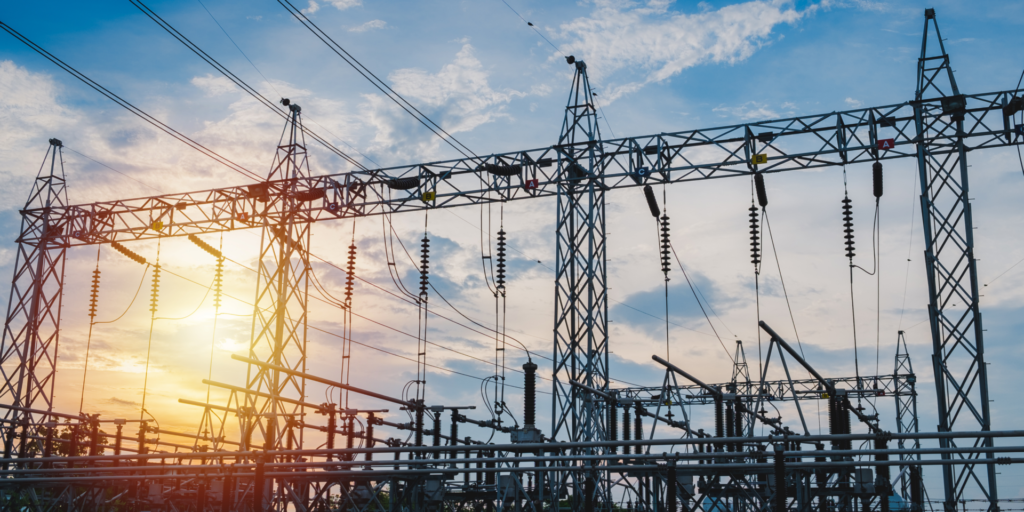
Copper switch-off is changing the role of in-building wiring
For decades, in-building copper wiring has been associated with traditional telecom services. It was originally installed for Plain Old Telephone Service (POTS) voice services and later used for Digital Subscriber Line (DSL) broadband technologies, including Very-high-bit-rate Digital Subscriber Line 2 (VDSL2). That history has shaped how many people view copper today. It is often seen as too old and too slow for high-speed connectivity.
But this perception misses an important distinction. The copper access network and the copper wiring inside the building are not the same.
As operators retire POTS and VDSL2 services, fiber becomes the primary access technology. Historically, the wiring inside an MDU was often associated with services delivered by the incumbent operator. In some markets, such as the UK, operators retained rights to the in-building wiring.
Copper switch-off changes that dynamic. Once those legacy services are retired, the existing wiring is no longer limited to its original purpose. Building owners and alternative service providers gain greater flexibility to repurpose that infrastructure as part of their fiber broadband strategy.
The result is a shift in perspective: what was once considered legacy infrastructure can now be repurposed for fiber-era broadband services and serve as a strategic broadband asset.
The MDU opportunity: turning homes passed into homes connected
MDUs represent one of the biggest market opportunities and challenges in broadband expansion. Operators have heavily invested in fiber networks, but bringing fiber to the building is only part of the equation. The real challenge is connecting every apartment inside the building. Across Europe, 35% of buildings are over 50 years old. In many MDUs, extending fiber to individual units can be complex, costly, and time-consuming, requiring additional investment, labor, and building access. As a result, many MDUs may have fiber available nearby, but residents can’t access the services.
For operators, this creates a widening gap between homes passed and homes connected. Europe has impressive fiber coverage, with 295 million homes passed, but it only generates value when residents are activated as subscribers.
This is where existing in-building wiring presents an opportunity. Rather than replacing copper and coaxial cabling, operators can repurpose it to accelerate subscriber activation and connect more residents sooner.

The hidden value of existing wiring
By repurposing existing wiring, operators can use our FiberBridge Positron GAM (Gigabit Any Media) solution to reliably achieve Gigabit-plus (about 1.4 Gbps) bandwidth over telephone pairs and coaxial cabling. This is over 10 times the bandwidth of VDSL2 (over 20 times in the upstream direction). This is why there is so much value in the legacy wiring of MDUs.
For operators, this means:
- Faster subscriber activation
- Lower installation costs
- Less disruption for residents
- More efficient use of fiber deployments
From broadband infrastructure to property value
The benefits of using legacy wiring extend beyond connectivity. The wiring serves as an Ethernet infrastructure that is critical to deploying managed Wi-Fi solutions and, ultimately, smart building IoT devices such as sensors, valve controls, and thermostats. This combination means that the broadband capabilities of an older building will match those available to new (greenfield) buildings.
For property owners, that means a practical path to modernizing older buildings and competing with newer developments. It can also contribute to higher tenant satisfaction, lower resident churn, higher revenues per apartment, and stronger property values. MDU residents benefit from a fully connected broadband lifestyle and high-speed broadband services. Finally, the broadband service provider will experience a higher take rate and higher average ARPU without needing to rewrite these older properties.
Copper switch-off is therefore not only a telecom story. It is increasingly a story about modernizing and connecting MDU homes.
Looking beyond the switch-off
Throughout our copper series, we have looked at copper switch-off from different perspectives. First, we explored the copper tipping point driven by the AI economy. Second, we provided practical strategies for managing copper retirement. Finally, this blog highlights a sometimes overlooked opportunity: the value that already exists inside the building. For MDUs, this marks a new beginning by unlocking the value already installed behind the walls.
Read our complete series: