Europe is approaching a tipping point for copper switch-off. In 2026, copper is more valuable than ever as a commodity, yet telecom operators are accelerating the transition from legacy copper networks to fiber infrastructure. At the same time, global demand for copper is rising rapidly, driven by AI data centers, electrification, renewable energy systems, and grid modernization. Copper remains essential to the energy transition. For the telecom industry, this is not a contradiction; it’s a necessary structural change. The same drivers that boost copper’s industrial value also reveal its technical and economic limitations in fixed access networks.
AI data centers are redefining network infrastructure
The AI era isn’t just a temporary spike in bandwidth; it’s a fundamental shift in how networks are used. AI workloads increase upstream traffic, lower latency tolerance, and demand higher reliability and resilience. Enterprises depend on real-time cloud platforms, distributed applications, and edge computing. Households are becoming micro data hubs, driven by cloud gaming, generative AI tools, hybrid work, and immersive digital services.

Copper networks were built for voice and asymmetrical broadband, enabling fast downloads but slow uploads. Historically, users consumed more content than they created. They were not designed for symmetrical, multi-gigabit, low-latency traffic patterns. Fiber, however, was.
Power constraints and energy demand are new bottlenecks
AI data centers are expanding quickly across Europe, putting unprecedented pressure on power grids and connectivity. Energy has become a bottleneck, and inadequate infrastructure is no longer just a minor technical issue but a structural liability. Several European countries are trying to handle demand through regulations. According to a report on the State of European Data Centres, access to power was ranked as the top challenge in the coming years. By 2030, data centers are expected to use 5% of Europe’s total power, more than double today’s 2%.
As sustainability reporting, energy efficiency, and operational costs come under scrutiny, copper infrastructure becomes harder to justify. Fiber’s passive architecture uses considerably less power per transmitted bit compared to traditional copper cabinets with active electronics. FTTH is not only faster but also more structurally efficient.
Copper switch-off in Europe: progress is advancing, but uneven
The shift from legacy copper access networks to fiber infrastructure is progressing across Europe, but at varying speeds. According to the FTTH Council Europe Copper Switch-off Tracker, which analyzes migration progress across 27 EU countries, the UK, Norway and Switzerland, fiber’s share of incumbent operators’ active access lines has grown from 53% to 62% within a year. This indicates a major structural move from copper to fiber.
Norway and Spain have finished the copper switch-off, with incumbent operators fully deactivating their legacy copper networks. In Germany and the Czech Republic, incumbents still depend heavily on copper. Planning transparency varies by market, and no national regulatory authority has set binding deadlines. However, in Denmark, France, Luxembourg, and Sweden, incumbent operators have announced voluntary target dates to end the copper switch-off process. For example, in Sweden, the main operator is planning to complete nationwide copper decommissioning by the end of 2026, with households switching to fiber or mobile networks. The recently proposed Digital Networks Act could speed up migration by offering more flexibility and incentives for operators to fully transition to fiber networks.
The economics of the copper switch-off
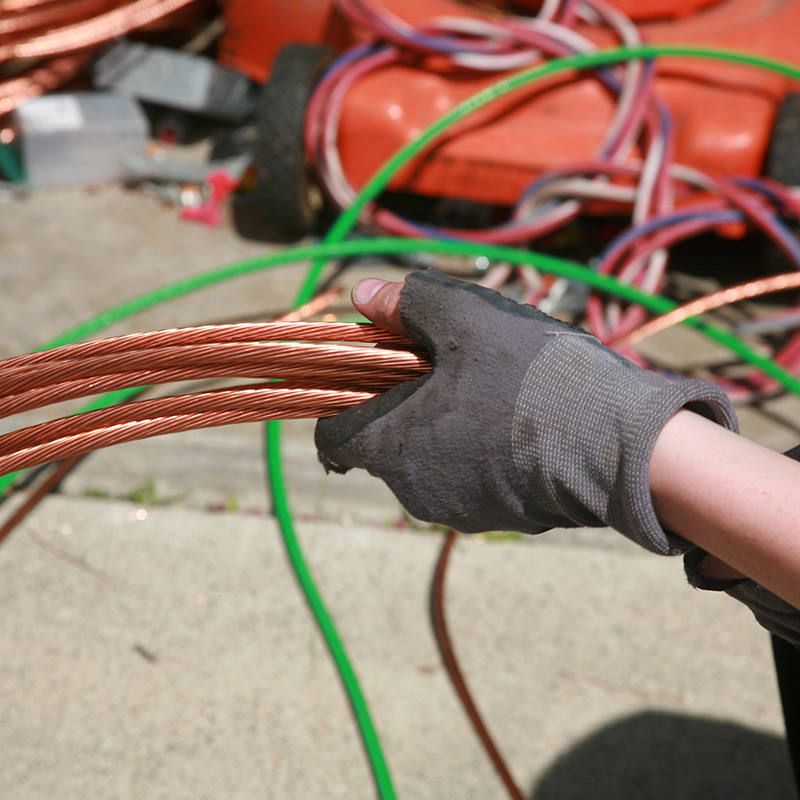
The rising value of recycled copper creates an additional incentive for operators to accelerate the copper switch-off. Large volumes of copper cables from legacy telecom networks can be recovered and recycled for other industries, such as energy infrastructure. Analysts estimate that migrating to fiber could unlock recycled copper worth about EUR 6.3 billion, creating another revenue source.
Maintaining parallel copper and fiber access networks during the migration period results in high operational costs. Old copper access infrastructure causes more troubleshooting, additional truck rolls, and more complex maintenance. Active street cabinets require extra power, and many operators face a shortage of skilled technicians capable of maintaining legacy copper networks.
Operators that delay the copper switch-off bear a dual-network burden, funding both legacy infrastructure and future investments simultaneously. FTTH migration simplifies network architecture, reduces operational complexity, and enables long-term revenue growth through symmetrical multi-gigabit services.
Why fiber edge access matters in the AI economy
The transition from copper to fiber is not just about replacing buried cables but also about redefining the access edge.

In the AI economy, the home serves as a strategic digital node. Reliable, secure, and remotely managed FTTH termination points are vital for scaling FTTH deployments. Interoperability across multi-vendor PON environments is essential for operators to grow their networks. Product development, lifecycle device management, firmware security, and standards-based architecture are key strategic choices.
Fiber networks are built for speed and future generations, but the real transformation happens at the last meters in the home. Furthermore, Genexis proactively develops circular products early in the design phase, as we recognize that 80% of a product’s environmental impact is already determined at that stage.
The copper switch-off tipping point is now
Across Europe, the phased-out copper network is progressing at varying paces. Growing demand driven by AI, along with data center expansion, energy use, and new rules, are all converging. FTTH is increasingly recognized as the future-proof infrastructure that replaces legacy copper networks and as a sustainable solution for Europe’s digital economy. The real challenge is how operators, policymakers, and ecosystem partners will navigate this crucial turning point.