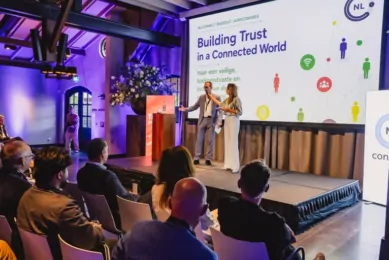
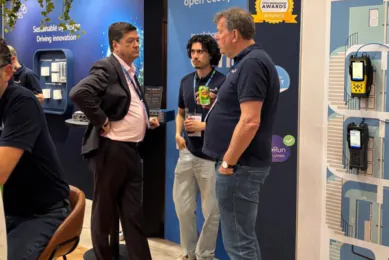
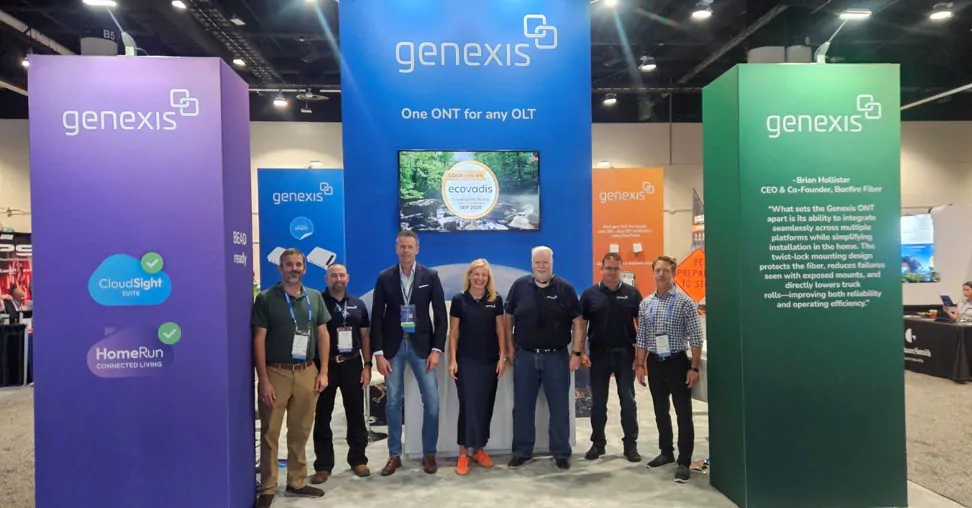
Once again, Genexis attended Fiber Connect 2026, one of the biggest fiber broadband events in the US, bringing together leaders, vendors, and operators to discuss the future of fiber broadband infrastructure. Traditional concerns such as improving take rates, lowering deployment costs, pursuing open-access and wholesale strategies, and reducing churn remain critical. But this year’s conversations revealed a broader shift in how the industry views fiber networks.
The focus is no longer simply connecting homes. Operators are looking at how fiber broadband infrastructure can support entire industries, digital economies, AI, and the next wave of bandwidth-intensive applications.
One year later: from interoperability to infrastructure readiness
When we attended Fiber Connect 2025, many conversations centered on interoperability, open-access networks, and reducing dependence on single-vendor ecosystems. We asked, “What keeps operators awake at night?” and many said that they are looking for ways to reduce operational risk, simplify upgrades, and avoid costly truck rolls. The focus was on building smarter, more flexible fiber networks that could evolve over time.
These concerns have not gone away. Operators remain focused on lowering deployment costs, improving take rates, reducing churn, and maintaining flexibility in their network architectures. Today, the uniform challenges operators face are astronomical construction costs and power constraints. They are the same as a year ago, but inflation has multiplied their impact.

Powering a “thinking economy” with fiber broadband infrastructure
What has changed is that the market is shifting its focus from simply connecting homes to enabling entire industries. This shift was captured in Fiber Broadband Association President and CEO Gary Bolton’s opening keynote, where he emphasized that our industry is moving beyond the “information economy” and transitioning to a “thinking economy.” In this new “thinking” market, value is no longer created by simply accessing information. Instead, value comes from turning that information into intelligence and acting on it instantly. According to Bolton, fiber is becoming the “nervous system” that enables this new economy, connecting people, homes, schools, businesses, and AI-driven applications and models. At Genexis, we couldn’t agree more.

At the same time, the industry is optimistic about AI-driven growth. Operators are asking how their fiber networks can support AI workloads, new digital services, and industries that will increasingly depend on low-latency, high-capacity connectivity. Concerns about power availability, workforce shortages, supply chain bottlenecks, and increasing deployment costs remain central.
Looking beyond equipment costs
One of the most impactful discussions at Fiber Connect centered on the true cost of network deployment and ongoing operations. At our Genexis booth, the FiberTwist ROI Calculator enabled operators to visualize and quantify the long-term financial impact of installation and operational expenses. The strongest engagement came when operators could see these costs translated into measurable business outcomes, highlighting the significant savings and operational efficiencies that FiberTwist can deliver over the life of the network. The ability to clearly demonstrate ROI resonated strongly with service providers focused on reducing total cost of ownership while accelerating subscriber growth and profitability.
Fiber as critical infrastructure
Fiber is becoming ubiquitous and a critical infrastructure beyond just telecom. According to the Fiber Broadband Association, US fiber deployment hit a record 11.8 million homes passed in 2025, pushing total homes passed over 100 million and covering 60% of households with access to reliable, high-speed, low-latency broadband. For 2030, the Fiber Broadband Association has a goal of 90% of US homes to be passed and 50% of homes connected.
Bolton compared fiber broadband infrastructure to a nervous system, an infrastructure layer that senses, transmits, and enables intelligent action. New opportunities are emerging every day in online streaming and gaming, tribal and rural areas, agriculture, healthcare, smart communities, and digital economies.

Fiber is crucial to meeting demand, and operators need to be prepared to expand beyond 10G. The growing interest in 25G and 50G PON reflects this reality. While many operators still focus on maximizing ROI, they are also beginning to evaluate how their networks can support future applications that require higher throughput, lower latency, and greater reliability.
Fiber connects intelligence
If Fiber Connect 2025 was about building smarter, more interoperable networks, Fiber Connect 2026 focused on preparing fiber broadband infrastructure for a larger role in society.
Interoperability, making operations more efficient and lowering deployment costs, remains essential. Operators still need to improve ROI, reduce costs, and expand their customer base. But the conversation is evolving. Fiber is becoming the critical infrastructure that enables entire industries. If the fiber industry’s focus has been connecting every home, the next chapter may be about connecting intelligence itself to serve our “thinking economy.” Operators that can optimize their networks and support the growing AI economy will be well prepared for the next chapter of fiber broadband.