For the past several years, we have exhibited and participated in conversations at ANGA COM, one of the largest events bringing together operators and vendors in the broadband industry. The event is always a valuable opportunity to meet our peers, customers, and partners, and to have our “eyes and ears on the ground” to capture the main concerns affecting our industry. While the event agenda and sessions focus on AI and future technologies, conversations on this year’s exhibition floor tell us what operators are focused on right now.
For years, fiber rollout has been measured by one key metric: homes passed. Today, the fiber broadband industry knows that passing homes alone is not enough. One message consistently came up in our conversations: the challenge is no longer simply rolling out fiber networks. It’s about turning fiber availability into active customer connections. We have also heard this same message at other industry events. Operators have been working to improve fiber adoption and activation for years, and this demonstrates how central this topic remains as the fiber broadband market matures.
An immediate question that surfaced was, “How can we connect more customers using the infrastructure we already have?”
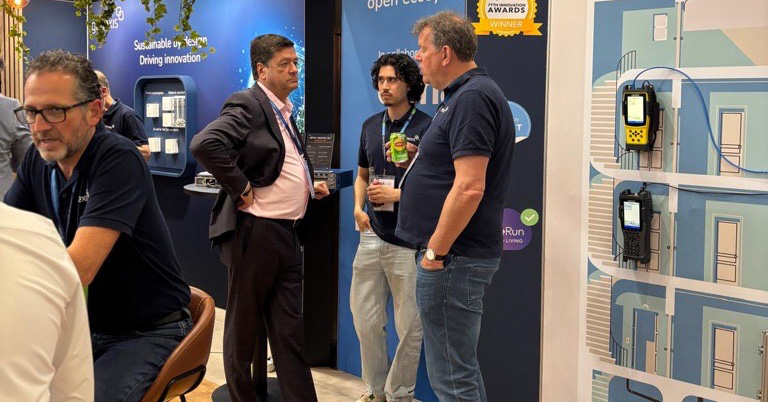
From coverage to customer activation
Converting homes passed to homes connected is a primary concern, as operators increasingly recognize that network coverage alone does not generate returns. With the initial fiber investment already in place, operators will see a return on investment when subscribers are activated and services are used. Many providers are concentrating on increasing take-up rates, connecting additional homes, and removing barriers that slow subscriber activation.
In Germany, this challenge is particularly relevant because operators have already invested heavily in fiber infrastructure. According to the FTTH Market Panorama in Europe 2025 report, Germany has 24.8 million homes passed and was identified as one of the top movers in homes passed in the EU compared with 2024. Yet only 6.1 million of those homes are active fiber subscribers.
While Germany continues to pass homes, the bigger issue and commercial opportunity is converting the remaining 18.7 million homes into paying subscribers. The trend extends beyond Germany, as the same report noted that the entire European FTTH market is transitioning from “coverage expansion to monetization and take-up acceleration.”
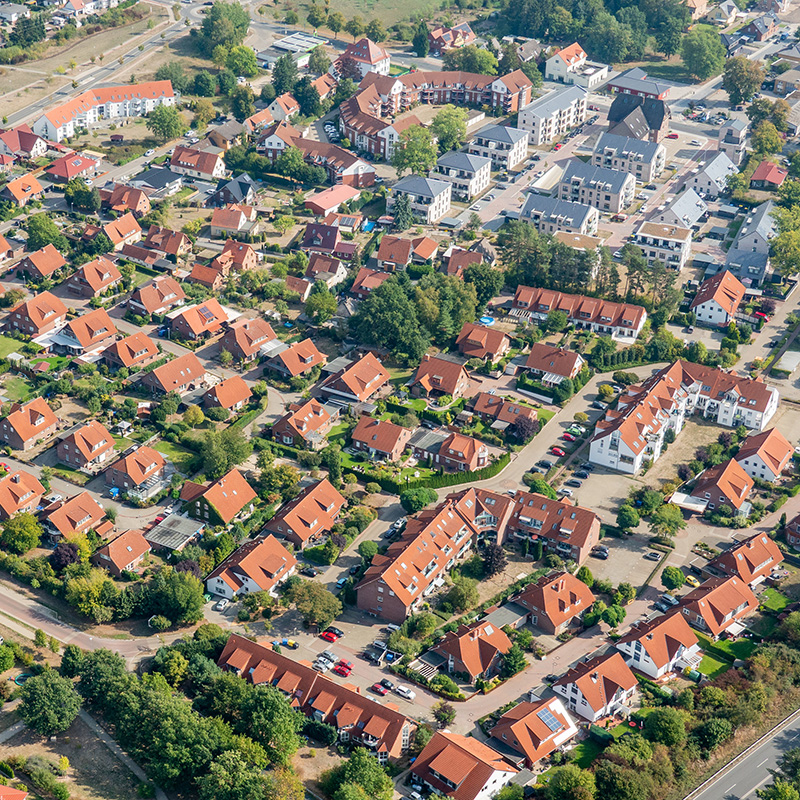
Germany’s open access evolution
Open Access Networks (OAN) was also a major topic at ANGA COM, as it is increasingly important for all market participants to achieve higher network utilization. With OAN, a single fiber network is shared by several service providers, allowing end-users to choose among competing broadband services. Germany has been more fragmented than some Nordic markets in its approach to OAN. Many German operators built networks for their own retail customers. This is changing. Large operators, municipal utilities (Stadtwerke), wholesale providers, and infrastructure investors recognize that open access can accelerate fiber adoption, expand their subscriber base, and improve network economics. One example is SWN, a regional service provider, which is transitioning to OAN in collaboration with Genexis.
Monetizing fiber networks
Our conversations at the event reflected the challenge of better network economics and monetization. As investment priorities evolve, operators are focused on practical questions:
- How quickly can customers be connected?
- How efficiently can existing networks be used?
- How can barriers be removed?
- How can operators increase revenue from their current fiber infrastructure?
There are no simple answers, but one practical approach is to connect potential subscribers in multi-dwelling units (MDUs).
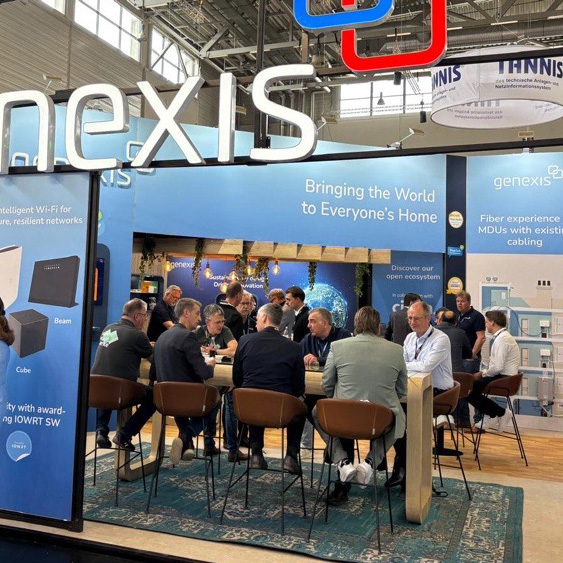
The last mile inside MDUs
One barrier to subscriber activation is the need to connect MDUs. Most European apartment buildings were constructed decades before fiber was considered in building design, leaving operators to work with legacy cabling. On the same street where fiber has been deployed, many apartment residents cannot access high-speed services. Operators continue to face situations in which fiber reaches a building but cannot be easily extended to every apartment because of renovation schedules, landlord approvals, or costly installations. Potential subscribers remain unconnected, and investments take longer to generate revenue.
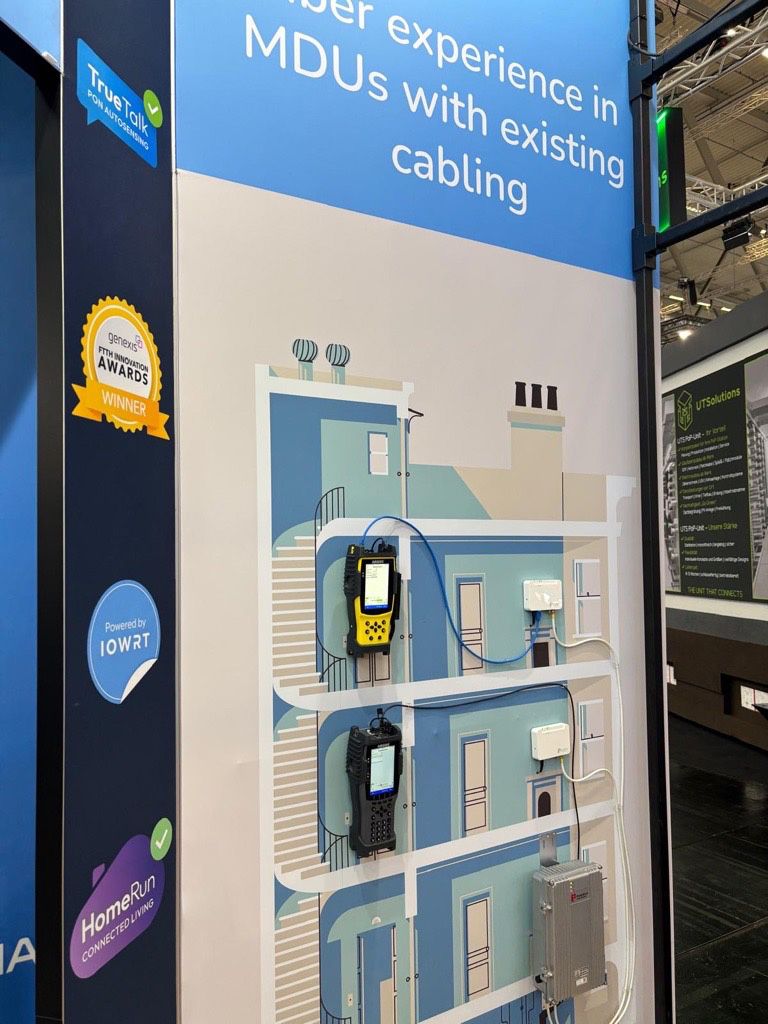
This challenge was one reason our MDU solution, FiberBridge, attracted strong interest at our booth. Rather than waiting for a full fiber retrofit inside an apartment building, FiberBridge enables operators to leverage legacy cabling, such as coax or twisted-pair, to extend fiber-like speeds to every apartment. This allows operators to activate subscribers immediately, and MDU residents gain access to high-speed broadband services.
Facing supply chain challenges
While activation dominated many conversations, supply chain concerns remain a recurring topic. Although severe supply chain disruptions during the pandemic have eased, operators and vendors face new sourcing challenges. Extended component lead times, semiconductor availability, memory chip pricing, geopolitics, and tariffs impact procurement planning. This adds complexity to network planning, budgeting, and service launches. Long-term planning is increasingly important to balance deployment schedules with component availability. In this environment, solutions that help operators maximize existing infrastructure and connect customers faster become even more valuable.
What ANGA COM confirmed
The event reinforced a reality that continues to shape broadband strategies across Europe: operators remain focused on activating subscribers. Fiber network deployment remains important, but investments deliver value only when subscribers use the services. Fiber coverage in Europe now exceeds 295 million homes passed (per the FTTH Market Panorama in Europe 2025), yet subscriber adoption is significantly lower, with only 161 million households subscribing.
Conversations at ANGA COM made one thing clear: while technologies continue to evolve, the most important challenge remains the same: closing the large gap between fiber availability and actual subscriber adoption.