In today’s connected world, security cannot be an afterthought. It must be built into every layer of an organization. At Genexis, we view security as an ongoing commitment rather than a destination. As cyber threats become more sophisticated, so do customer expectations, network requirements, and industry standards. Driving us to invest more in security and ensure that our software ecosystem remains aligned with the latest technologies and best practices.
A key enabler of this strategic decision is Genexis’ IOWRT platform as we look to integrate new technologies, security enhancements, and expand our operational capabilities. Because we control how our software is developed, tested, and released, security fixes can be delivered to operators on our own timeline.
So, how do we achieve this?
The development of IOWRT’s security features is driven by several key focus areas, each playing a critical role in maintaining a secure platform. From customer-driven updates to ongoing R&D investment and regulatory compliance, these focus areas play an integral role in the development of our software roadmap and long-term vision.
1. Securing next-generation fiber networks
Broadband standards play an increasingly important role in fiber network security. Technologies such as Wi-Fi 7, emerging developments around Wi-Fi 8, USP/TR-369, and EasyMesh not only improve performance and manageability but also strengthen device management and interoperability across the connected home.
Supporting these advancements goes beyond compatibility. It requires platform enhancements, architectural updates, validation processes, and security assessments. Our teams continuously evaluate new market standards, ensuring they deliver both operational value and strong security foundations before they are integrated into IOWRT software.
This proactive approach allows service providers to adopt new fiber and network technologies with confidence, knowing that stability, performance, and security remain top priorities.

2. How industry standards strengthen network security
Modern industry standards are not just about performance improvements. They also introduce stronger security capabilities, more secure device management, and better interoperability.
Examples include:
- Wi-Fi 7 not only adds capacity but also makes the latest wireless encryption standard mandatory rather than optional.
- USP/TR-369 is a foundational element of our platform, enabling secure, granular access control for connected devices. Operators can precisely define which parts of a device a partner can access, eliminating the need to expose the entire device and providing greater security, flexibility, and governance.
- EasyMesh simplifies multi-access-point network management and improves the user experience.
By integrating these standards into our IOWRT software platform, Genexis helps customers benefit from the latest market developments in real time while maintaining a secure platform.
3. Building security into the IOWRT software roadmap
To remain ahead of the market, IOWRT is designed to evolve alongside industry developments rather than relying on legacy approaches.
When evaluating new technologies with specific regard to security, we assess:
1. Security implications and threat models
2. Compatibility requirements & long-term scalability
3. Customer deployment evaluation & feedback
- Operational maturity & support lifecycle
This process allows us to integrate new capabilities without compromising the reliability operators expect.
4. Fiber network security, quality and compliance
Security is most effective when treated as a business priority. As cyber threats and regulatory requirements evolve, maintaining a secure platform requires ongoing attention.
At Genexis, security, quality, and compliance are embedded throughout each layer of the software lifecycle. Every software release undergoes extensive validation and testing to ensure platform integrity and performance.
Our teams respond to, monitor, and address:
- Cyber security threats and vulnerabilities
- Security advisories
- Industry and regulatory requirements
- Product quality and performance metrics
- Software maintenance and lifecycle management
By proactively managing these areas, this helps to ensure that our IOWRT remains secure and reduces operational risk and costs for operators and end users alike.
Moreover, when new vulnerabilities are discovered across the technology ecosystem, our teams assess potential impacts and, where relevant, quickly implement mitigations to strengthen the platform’s security position.
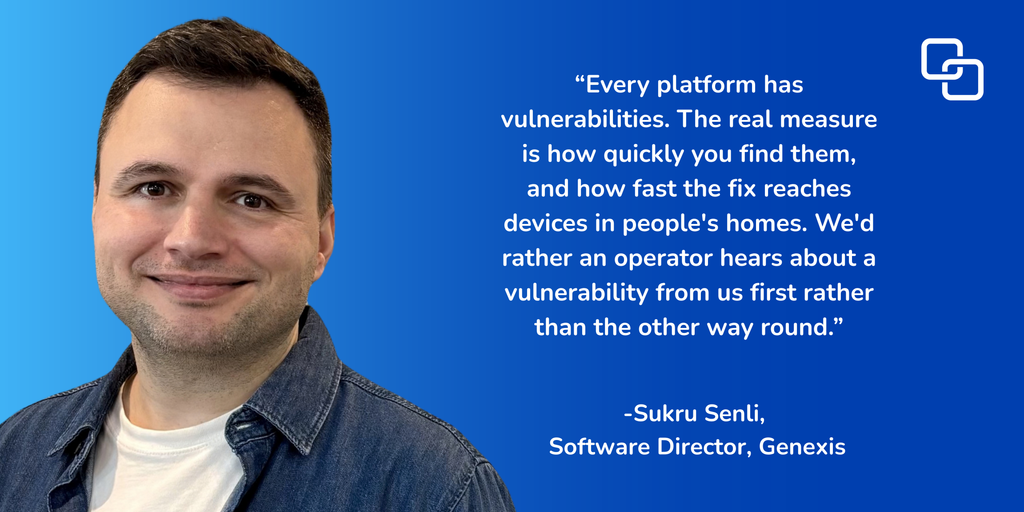
While quality remains a critical pillar of customer trust, new features and enhancements, including security fixes, must not only deliver functionality but also maintain the performance, stability, and reliability that service providers depend on every day.
Want to strengthen the security of your fiber network?
Discover how Genexis and IOWRT can help you build a secure, manageable, and future-ready fiber broadband network.
Learn more about our security approach:
Securing the entire home fiber journey
Beyond standards: a multi-layer approach for open fiber networks
CPE lifecycle security: why continuous device management is essential for operators and ISPs