As demand for highspeed broadband continues to grow, fiber has become the obvious choice for new homes and modern MultiDwelling Units (MDUs). It offers the performance, scalability, and reliability needed to support everything from streaming and cloud services to smart home applications.
However, a large share of Europe’s housing tells a different story. According to Eurostat approximately 48% of the EU population lives in flats or multi-dwelling units (MDUs) of which 35% of the EU’s buildings are over 50 years old. Older MDUs were built long before fiber was considered, and most rely on legacy inbuilding cabling such as coax or twisted pair. While fiber may already reach the building, extending it to every apartment often proves difficult.

Why older MDUs are hard to upgrade
Upgrading legacy MDUs is rarely just a technical decision. Rewiring entire buildings can require structural changes, coordination with building owners, and access to occupied apartments. The result is often high costs, long deployment timelines, and disruption for residents. For network operators and ISPs, this creates a real challenge. Leaving these buildings underserved is not an option, as bandwidth intensive applications become the norm from streaming and remote work to connected home services, residents in older MDUs simply cannot keep up without meaningful upgrades. The European Union aims for all households to have access to a 1 Gbit/s (gigabit) internet connection by 2030, in their “Digital Decade” initiative. But full inbuilding fiber rollouts don’t always make economic sense. The question becomes how to raise speeds and service quality without rebuilding the entire infrastructure.
What an effective MDU solution needs to deliver
To address this challenge, a viable solution for older MDUs must achieve a careful balance. It needs to deliver modern performance while working within the practical constraints of existing buildings.
In practice, that means:
- Reusing existing in‑building cabling rather than replacing it
- Supporting gigabit and beyond‑gigabit speeds
- Avoiding multiple parallel technologies for different cable types
- Integrating smoothly with existing fiber network operations and management
- Without these elements, MDU upgrades risk becoming complex, costly, and difficult to scale.
Leveraging existing cabling to deliver gigabit broadband
One way to meet these requirements is by using a technology that allows high‑speed broadband to run over legacy cabling already present in MDUs. By doing so, operators can upgrade service levels while keeping construction work to a minimum. This approach significantly reduces deployment time and disruption, while still enabling residents to experience beyond gigabit speeds. It also helps operators maintain a consistent network strategy, rather than managing separate solutions for different building types.
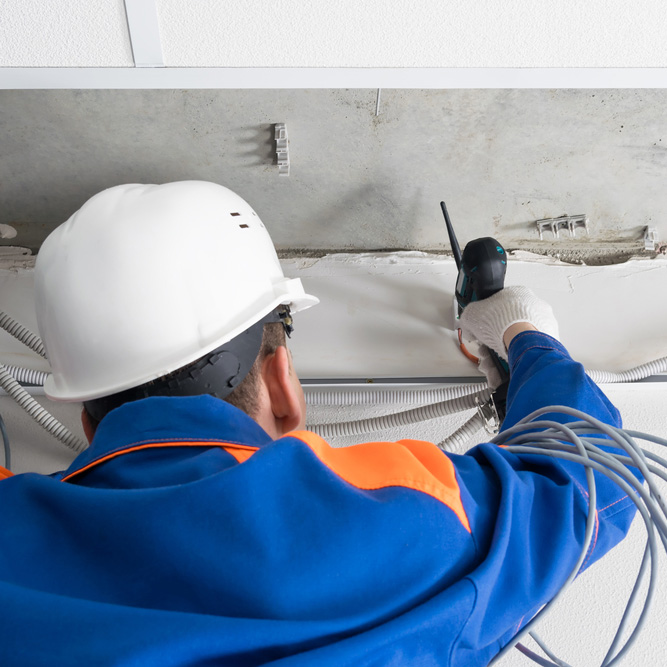
Just as importantly, any MDU solution must fit into existing operational models. Managing MDU endpoints should be no different from managing fiber connections, using familiar tools, workflows, and systems.
Delivering a fiber experience to all with Genexis FiberBridge
The Genexis FiberBridge addresses the challenge of legacy MDUs by enabling beyond gigabit broadband over existing coax or twisted pair cabling, using G.hn technology. It allows operators to upgrade older apartment buildings without rewiring, while managing those connections in the same way as fiber ONTs.
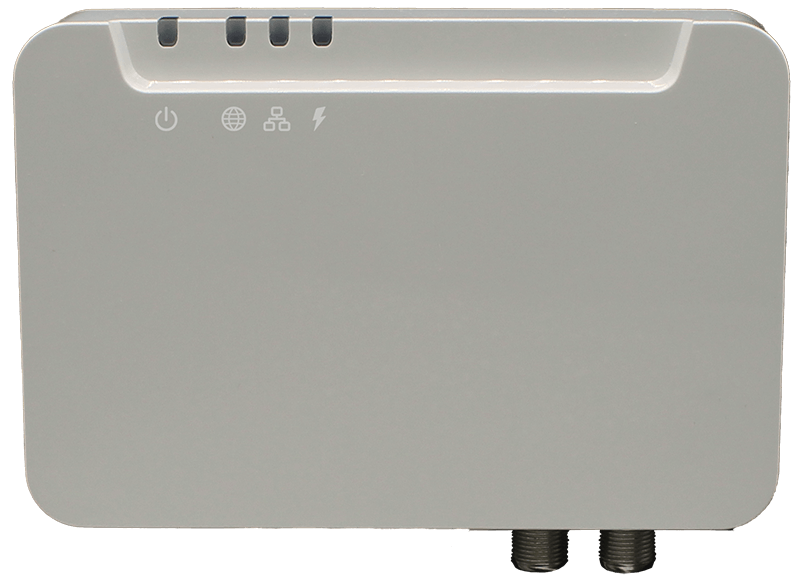
The solution integrates with major OLT brands, is OMCI compliant, and works seamlessly with existing OSS/BSS systems, keeping operations simple and consistent. Compact endpoints with 2.5GE LAN ports ensure performance beyond 1 Gbps, while flexible power and installation options support a wide range of MDU scenarios. By reusing what is already in place, FiberBridge offers a practical way to extend modern broadband to older MDUs without the cost and disruption of rewiring.
Availability
The Genexis FiberBridge solution is currently available in the following countries: Germany, Austria, Switzerland, the UK, Finland and Slovenia, with plans to expand further across Europe.